
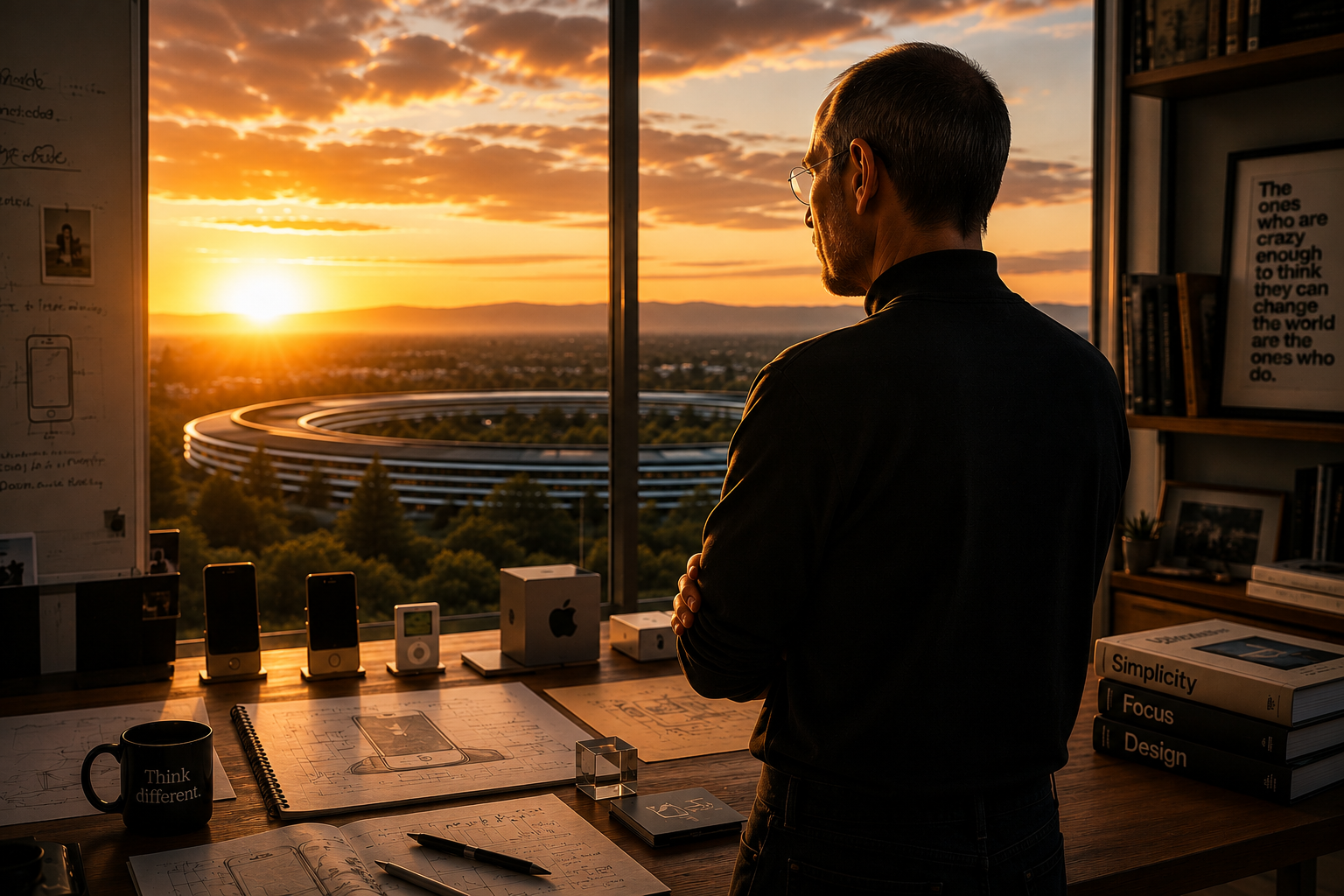
Few people have changed the way we live as profoundly as Steve Jobs. From the Macintosh to the iPhone, the iPad, and Pixar, his influence continues to shape how we work, communicate, create, and experience technology.
People often describe Jobs as a visionary, perfectionist, or brilliant entrepreneur. While all of those labels contain some truth, they don’t fully explain his extraordinary impact. His greatest strength wasn’t simply generating innovative ideas—it was protecting the few ideas that mattered most.
Jobs believed that technology should enrich people’s lives through simplicity, beauty, and intuitive design. That conviction became a filter for nearly every decision he made. Whether he was launching a new product or eliminating an entire product line, he continually asked what truly deserved his attention.
His story reminds us that purpose isn’t only about having a compelling vision. It’s about protecting that vision from the countless distractions competing for our time and energy.
What Appears to Be His “Why”?
Steve Jobs seemed driven by a desire to build products that made technology more human.
He wasn’t interested in creating gadgets simply because they were technically impressive. He wanted people to experience technology that felt elegant, intuitive, and almost invisible. He often spoke about standing at the intersection of technology and the liberal arts, believing that the greatest innovations emerged when engineering met creativity and humanity.
His famous challenge to “make a dent in the universe” wasn’t about fame or wealth. It reflected a belief that thoughtful design could genuinely improve people’s lives.
That purpose gave meaning to the long hours, the difficult conversations, and the relentless pursuit of excellence that became synonymous with Apple’s culture.
Purpose Isn’t Enough
Steve Jobs had a powerful vision, but vision alone wasn’t what rebuilt Apple.
When he returned to the company in 1997, Apple was struggling. The company had dozens of confusing product lines, scattered priorities, and dwindling resources. Many organizations in that position would have added more products to “capture more market share.”
Jobs did the opposite.
He eliminated roughly 70% of Apple’s product line and concentrated the company around just a handful of products. That decision wasn’t simply a business strategy; it was an act of purpose maintenance. By removing distractions, he gave Apple’s mission room to breathe again.
Jobs famously said that innovation comes from saying “no” to a thousand things. That idea extended far beyond product development. Every unnecessary meeting, feature, partnership, or project had the potential to pull attention away from what mattered most.
His example illustrates an important truth: finding your why is only the beginning. Protecting it often requires making difficult decisions about what not to pursue.
The Daily Practices That Kept His Mission Front and Center
Steve Jobs wasn’t known for motivational rituals or elaborate morning routines. Instead, he built habits that continually reinforced clarity and focus.
Daily Check-in
One of his best-known practices was asking himself each morning:
“If today were the last day of my life, would I want to do what I’m about to do today?”
If the answer was “no” for too many days in a row, he believed something needed to change.
That simple question acted as a daily reality check. It helped prevent comfort, routine, or outside expectations from quietly replacing purpose.
Keep it Simple
Jobs also maintained extraordinary standards for simplicity. Product reviews often involved repeatedly removing features rather than adding them. Teams were challenged to eliminate unnecessary complexity until only the essential remained.
His work environment reflected similar discipline. Apple intentionally kept product development highly focused, with small teams working intensely on a limited number of priorities.
Challenge the Status Quo
Perhaps most importantly, Jobs surrounded himself with exceptionally talented people who were willing to challenge ideas while remaining committed to the same overarching vision. Purpose became something reinforced collectively, not just individually.
Together, these habits formed an ecosystem that constantly pulled attention back to the mission.
What We Can Learn
Most of us don’t need to reinvent an industry. But we all face the same challenge Steve Jobs did: distraction.
Every day presents opportunities that seem worthwhile. New commitments, projects, emails, meetings, and obligations compete for our attention. The danger isn’t usually choosing something bad. It’s allowing too many good things to crowd out the thing that matters most.
Jobs reminds us that clarity often comes through subtraction. Sometimes protecting your purpose means declining opportunities that don’t align with it.
Sometimes it means simplifying your schedule. Sometimes it means creating boundaries that allow your best work to flourish.
Purpose grows stronger when it has room to breathe.
My Takeaway
One aspect of Steve Jobs’ life continues to stand out to me: his willingness to simplify.
We often assume success requires adding more—more goals, more projects, more commitments. Jobs repeatedly demonstrated the opposite. His greatest breakthroughs frequently came after eliminating distractions rather than accumulating them.
That lesson feels especially relevant today.
We’re surrounded by notifications, endless information, and constant opportunities to divide our attention. Without realizing it, we can slowly drift away from the work and relationships that matter most.
Purpose doesn’t disappear overnight. It fades, one distraction at a time.
Steve Jobs reminds us that protecting our why isn’t primarily about working harder. It’s about becoming increasingly intentional about where we place our focus.
The “Why Maintenance” Profile
Primary Why: To create beautifully designed technology that enriches people’s lives by making powerful tools simple, intuitive, and deeply human.
Primary Reinforcement Method: Relentless focus through intentional simplification—continually removing distractions so energy remained concentrated on what mattered most.
Additional Reinforcement Systems:
- Beginning many days by asking whether he was spending his life on work that truly mattered.
- Ruthlessly narrowing priorities rather than expanding them.
- Maintaining exceptionally high design standards.
- Building small, highly focused teams aligned around a shared vision.
- Protecting Apple’s culture from unnecessary complexity.
Big Idea: Your purpose becomes clearer every time you decide what doesn’t deserve your attention.
Question for Reflection: What one commitment, distraction, or obligation could you remove this week to make more room for the work that matters most?
Mind Your Why This Week
For the next seven days, practice saying “no” with purpose.
Each morning, identify the single most important task that moves you closer to your purpose. Complete it before allowing less important demands to consume your attention.
At the end of each day, ask yourself one simple question:
Did my calendar reflect what matters most to me today?
You may discover that protecting your purpose isn’t about finding more time. It’s about giving your best attention to fewer things.
Don’t just find your why. Mind it.